Don't Get Crossed Wires with These Top IP PBX Providers
The Best IP PBX Providers for Small Businesses in 2026
IP PBX providers give businesses a smarter, more affordable way to manage phone calls — without the clunky hardware of old-school phone systems.
When searching for the right partner, you need a system that balances advanced features with reliable support. Modern hosted IP PBX systems are far simpler, cheaper, and more reliable than traditional setups. Whether you need AI-driven tools, international calling capabilities, or simple plug-and-play functionality, the right provider will tailor their solution to your specific business goals.
Switching phone systems feels overwhelming — especially when you're running a business and can't afford downtime or surprise costs. The good news? The transition is smoother than ever.
I'm Michael Gaigelas, and with 20 years of hands-on experience in IT support, VoIP, and telecommunications, I've helped countless businesses cut through the noise and find the right ip pbx providers for their needs. In this guide, I'll walk you through exactly what to look for — and what to avoid.
Understanding IP PBX Systems and How They Work
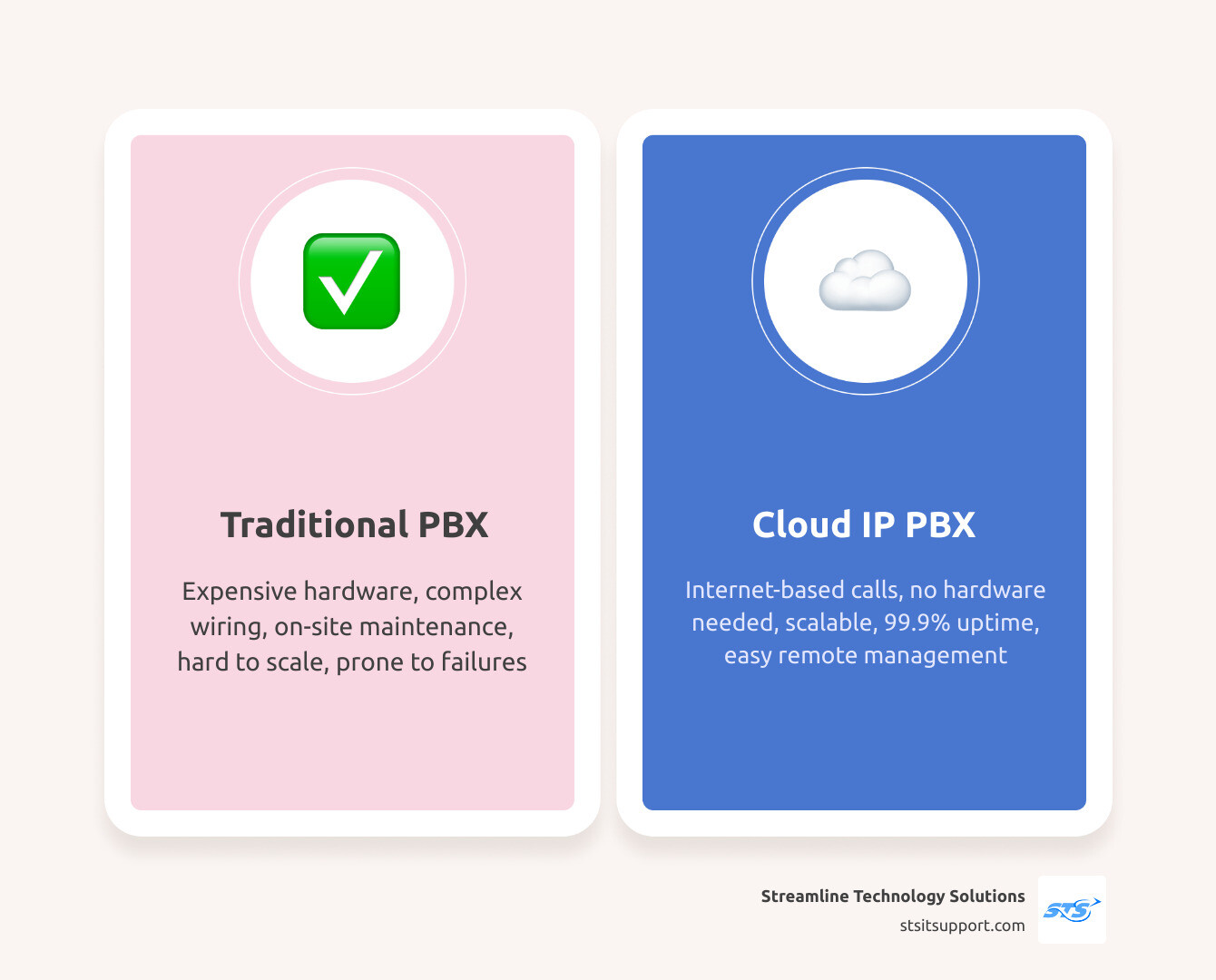
To understand why ip pbx providers are taking over the market, we first need to look at what an IP PBX actually is. PBX stands for Private Branch Exchange. In the old days, this was a massive, tangled box of wires in a closet that connected your office phones to the public telephone network (PSTN). It was expensive to install, a nightmare to move, and required a specialized technician every time you wanted to add a single new employee.
An IP PBX (Internet Protocol Private Branch Exchange) changes the game by using the internet to route your calls. Instead of sending electrical signals over copper wires, your voice is converted into digital packets. These packets travel over your internet connection, just like an email or a YouTube video.
How the Magic Happens: VoIP and SIP Trunking
The engine behind this technology is VoIP (Voice over Internet Protocol). When you dial a number, the system uses SIP Trunking to connect your digital phone system to the rest of the world. Think of SIP trunking as a virtual version of a physical phone line. It allows you to have unlimited concurrent calls without needing a hundred physical wires running into your building.
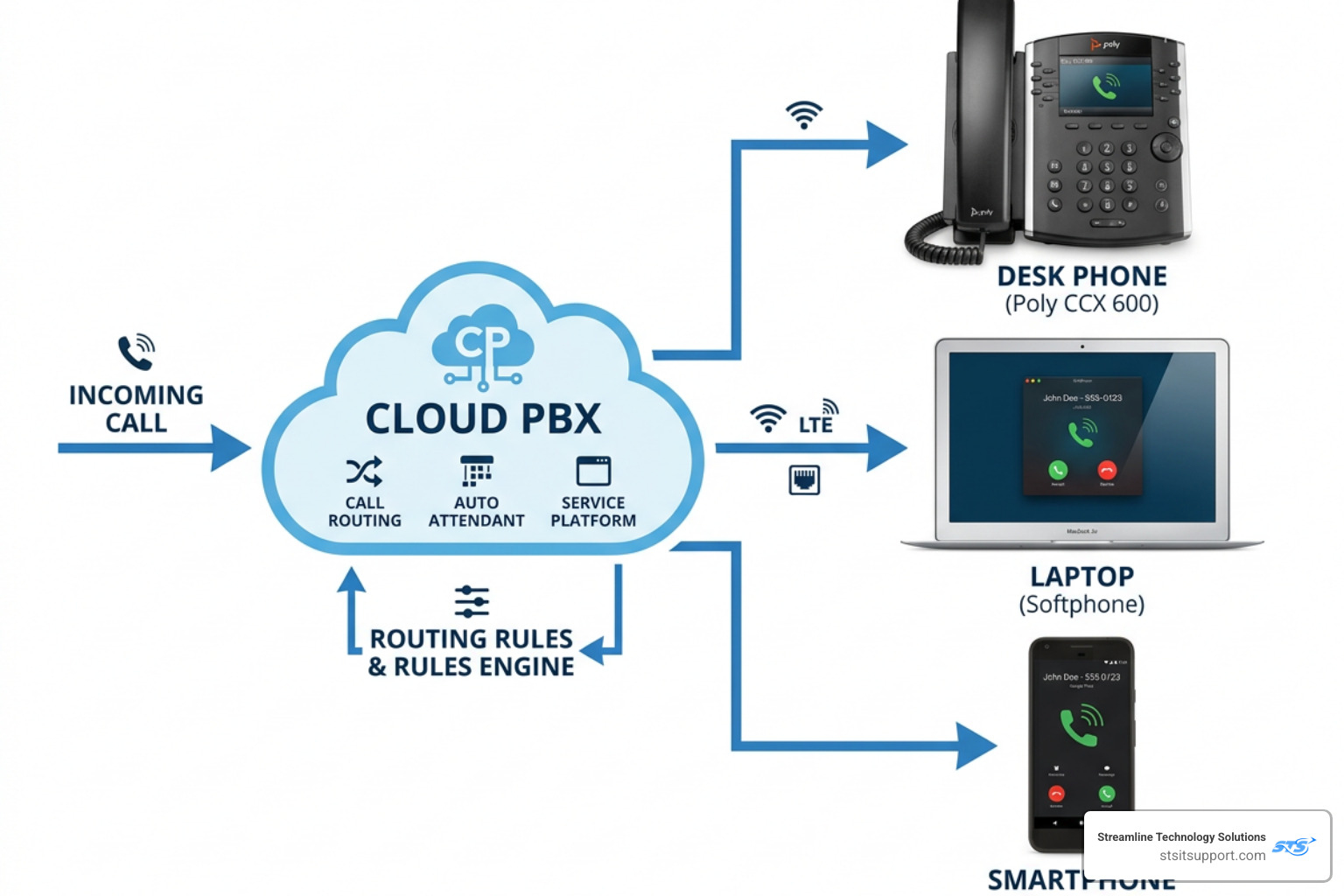
Because everything is digital, call routing becomes incredibly flexible. You can send a call to a desk phone in Boca Raton, a laptop in Fort Lauderdale, and a smartphone in Coral Springs all at the same time. This is why many businesses are moving toward "Hosted" solutions, where the actual "brain" of the phone system lives in a secure, off-site data center managed by professional ip pbx providers.
Key Benefits of Choosing Hosted IP PBX Providers
If you are still holding onto an on-premise PBX, you might be surprised at how much it is actually costing you. Beyond the monthly bill, there is the cost of electricity, floor space, and the inevitable "emergency" repair when the hardware decides to quit on a Monday morning.
1. Massive Cost Savings
One of the most compelling reasons to switch is the financial impact. Statistics show that 82% of companies save money moving to the cloud. In many cases, businesses see 50-75% savings over legacy systems because they no longer have to pay for "line rentals" or expensive maintenance contracts.
2. Scalability That Keeps Up with You
In South Florida, businesses grow fast. With traditional systems, adding ten new employees meant buying new hardware cards and waiting for a technician. With hosted ip pbx providers, you simply log into a portal and add ten new users. It takes minutes, not weeks.
3. Reliability and Uptime
Top-tier providers offer incredible stability. Leading solutions often provide a 100% Uptime Guarantee or back their service with a 99.9% SLA. Because the system is hosted in the cloud with geo-redundant data centers, your phone system stays "up" even if your local office loses power.
Hosted PBX vs. On-Premise: A Quick Comparison
Feature Hosted IP PBX On-Premise PBX Upfront Cost Very Low (OpEx) High (CapEx) Maintenance Handled by Provider Handled by Your IT Team Remote Work Native Support Requires VPN/Complex Setup Updates Automatic & Free Manual & Often Paid Scalability Instant Limited by Hardware
Essential Features and Integrations for Modern Business
When you’re looking at different ip pbx providers, don’t just look at the price. You need to look at the "toolbox" they provide. A modern phone system should do much more than just make calls; it should be the hub of your business communication.
Selecting IP PBX Providers for Scalability
For a business in Pompano Beach or Deerfield Beach to stay competitive, they need features that make them look like a Fortune 500 company.
Auto-Attendant & IVR: This is your "virtual receptionist." It greets callers and directs them to the right department ("Press 1 for Sales").
CRM Integration: Imagine your computer screen "popping" with a customer's history the moment they call. Top providers integrate seamlessly with tools like HubSpot, Zendesk, and Odoo.
Presence Indicators: See who is on a call, who is at lunch, and who is available before you try to transfer a customer.
If you're looking to overhaul your entire setup, you might want to Learn more about IT Projects to see how a new phone system fits into your larger technology roadmap.
How to Evaluate IP PBX Providers for Security
Security isn't just a "nice to have" — it's a requirement, especially for our clients in the medical and legal fields in Boca Raton. When evaluating ip pbx providers, ensure they offer:
TLS and SRTP Encryption: This ensures that your voice data is encrypted from the moment it leaves the phone until it reaches the recipient. No one can "eavesdrop" on your digital packets.
HIPAA Compliance: If you handle patient data, your provider must sign a Business Associate Agreement (BAA) and prove their platform meets federal standards.
STIR/SHAKEN: This is a fancy name for technology that fights "spoofed" robocalls, ensuring that when your customers see your name on their caller ID, they know it’s actually you.
Deployment Options and Hardware Requirements
One of the biggest myths about switching to an IP PBX is that you have to throw away all your old gear and buy thousands of dollars in new phones. While you can buy new hardware, you have plenty of options.
The Hardware Mix
IP Phones: These look like traditional desk phones but plug into your internet router instead of a wall jack. Many providers even offer "free phone" promos when you sign up for certain plans.
Softphones: This is just a piece of software you install on your computer. You use a headset, and your laptop becomes your office phone.
Mobile Apps: This is the ultimate tool for remote work. Your business extension lives on your smartphone. When you call a client, they see your office number, not your personal cell number.
Bandwidth and Setup
Setting up a hosted system is usually a three-step process:
Sign Up: Choose your plan and your phone numbers.
Configure: Use a drag-and-drop web portal to set up your call flow (who rings first, what the music on hold sounds like).
Plug and Play: Connect your phones to the internet. Most modern IP phones will "call home" to the provider and configure themselves automatically.
Just keep in mind that each high-quality voice call requires about 80Kbps of bandwidth. For most businesses in Ft. Lauderdale with standard high-speed internet, this is a drop in the bucket.
Frequently Asked Questions about IP PBX
How easy is it to port existing phone numbers to a new provider?
This is the number one concern for most business owners. Your phone number is your brand! The good news is that you can almost always keep your number. This process is called Number Porting. You’ll sign a Letter of Agency (LOA) and provide a recent invoice from your current carrier. The actual switch usually takes between 3 to 10 business days. During that time, your old phones keep working until the exact moment the "port" happens.
What happens to my phone system if the internet goes down?
In South Florida, we have to worry about the occasional tropical storm or construction crew cutting a fiber line. Top ip pbx providers have a built-in "failover" feature. If the system detects your office is offline, it can automatically reroute all incoming calls to your employees' mobile apps or a secondary landline. Your customers will never even know there was a problem.
How much does a hosted IP PBX typically cost per user?
The pricing model is usually a monthly subscription. You can expect to pay anywhere from $15 to $35 per user, per month. Some providers offer "Pay-As-You-Go" models for very small teams, while others offer "Unlimited" plans that include all your local and long-distance calling. When you compare this to the hundreds of dollars businesses used to spend on "PRI circuits" and hardware maintenance, the savings are clear.
Conclusion
Choosing between the various ip pbx providers doesn't have to be a headache. Whether you are a small startup in Deerfield Beach or a growing medical practice in Boca Raton, the right system will save you money, support your remote team, and make your business look more professional.
At Streamline Technology Solutions, we specialize in taking the "tech stress" off your plate. We provide South Florida businesses with transparent pricing (no "mystery fees" on your bill), fast local support, and the direct accountability you deserve. We don't just sell you a system and disappear; we make sure it works for your specific workflow.
Ready to stop fighting with your old phone system? Contact us for a consultation today, and let’s get your business communicating the way it should.